Photography
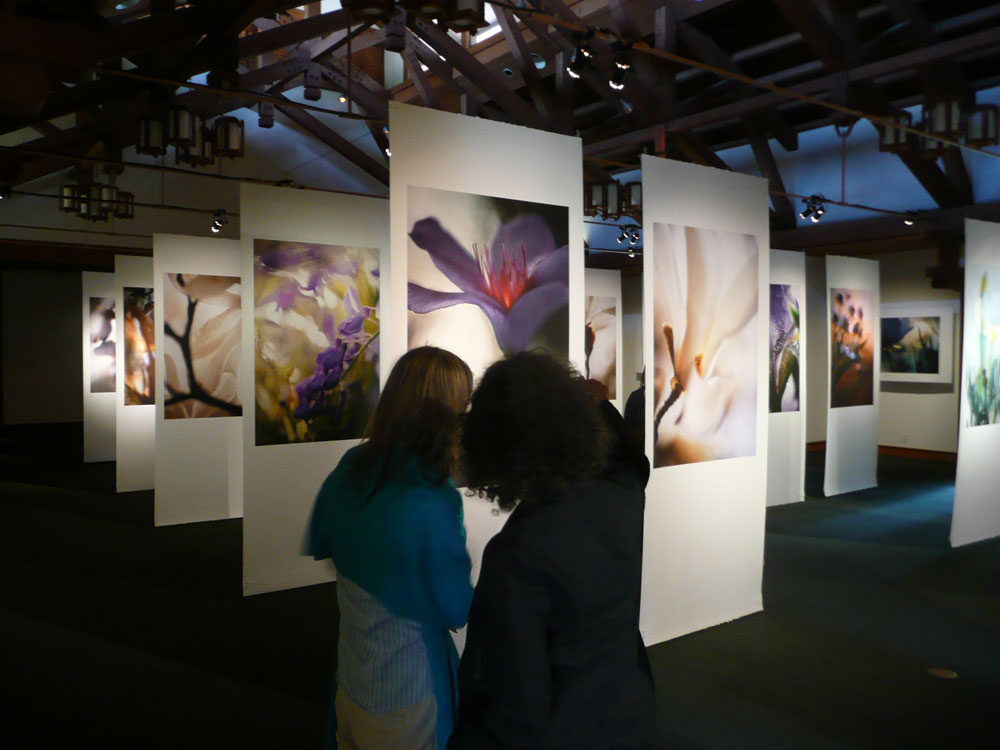
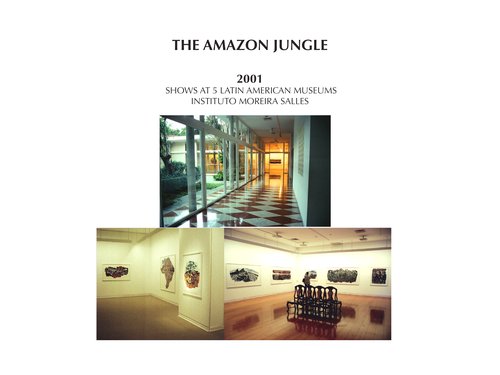
For 15 years I was obsessed with taking a hundred photos instead of just one, and I had retrospective shows in Venice, California, Rio de Janeiro, Brasil, and London, England, among others.
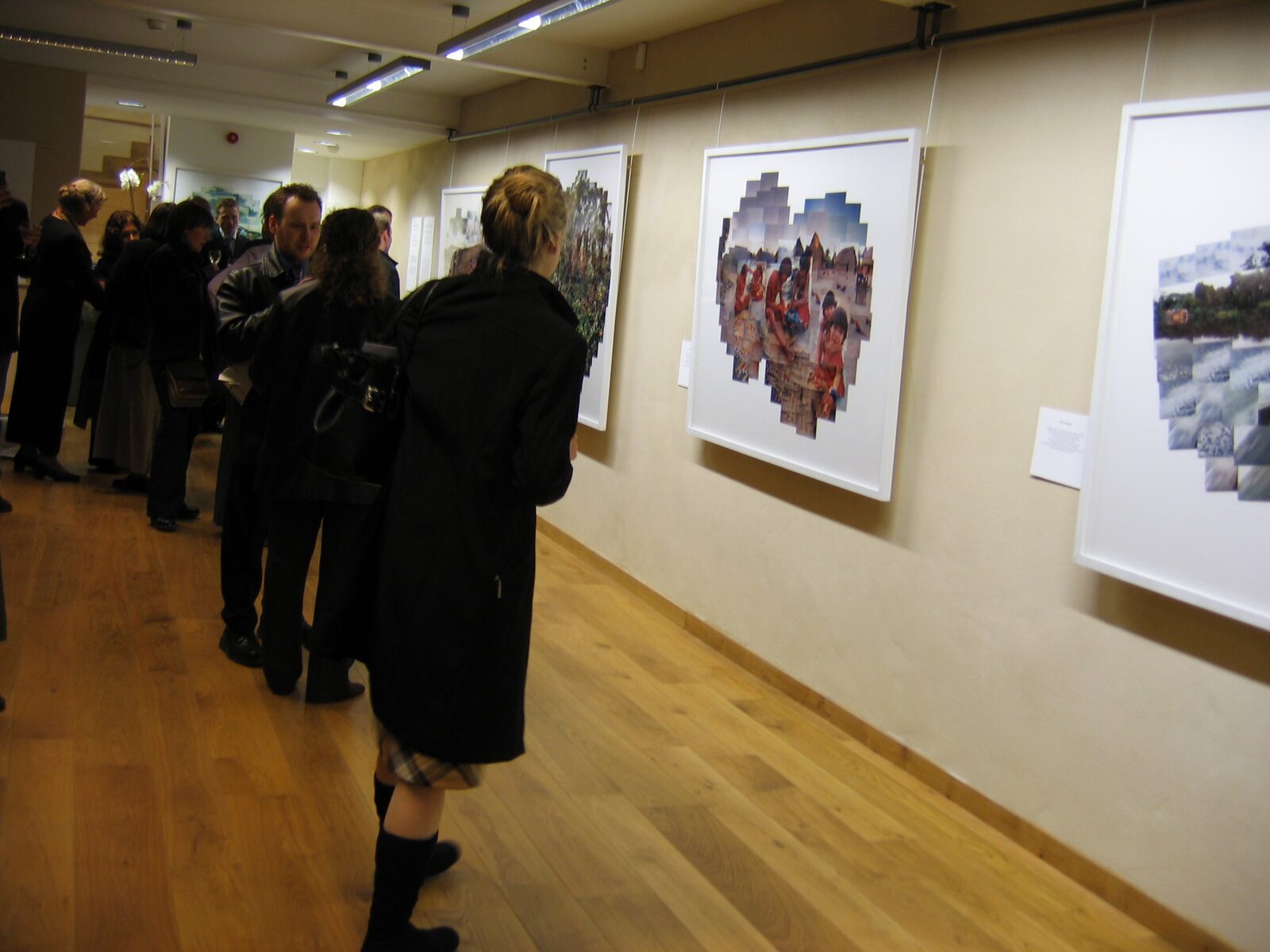
“Gathering Riches – Beauty and Greed in the Brazilian Amazon”
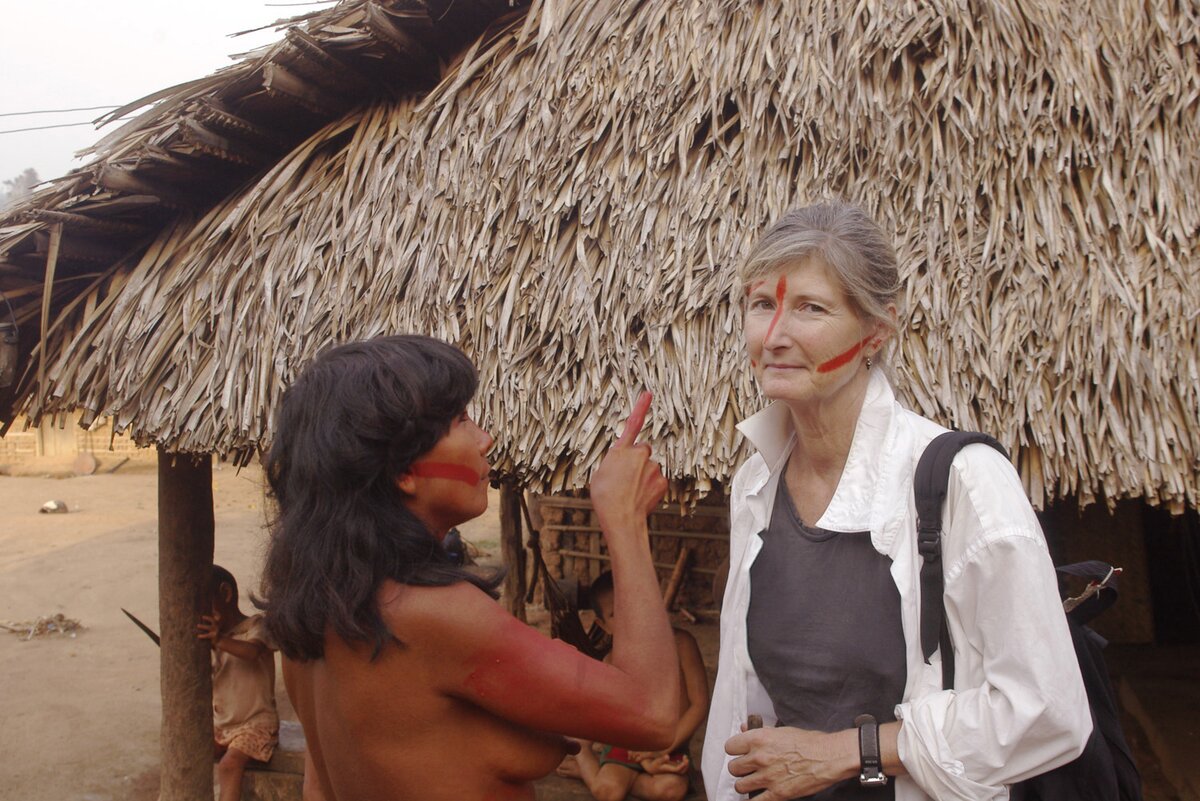
London, 2004The shows were based on work I did while spending several months a year for 12 years in the Amazon jungle, working with six Indian tribes rebuilding their neglected healthcare through a project known as the Amazon Coop, based in the state of Pará.
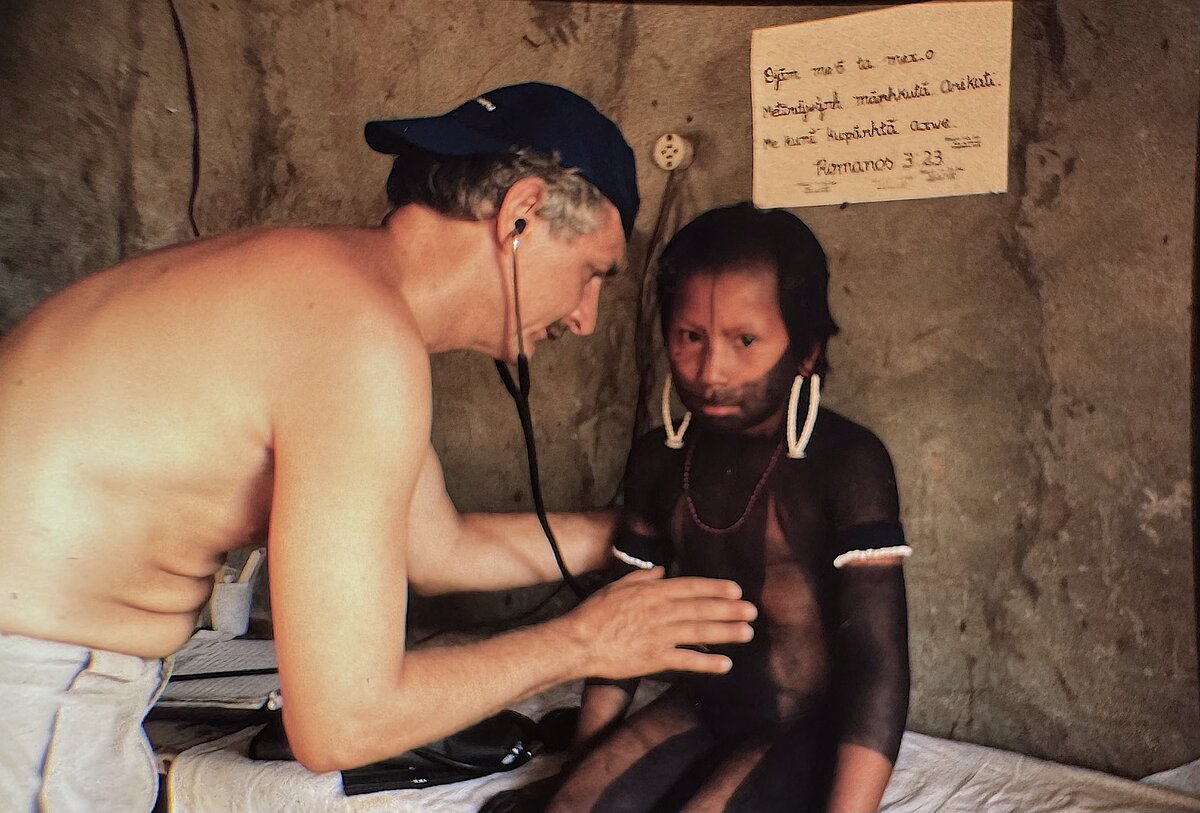
Gathering Riches: Images from the Brazilian Amazon
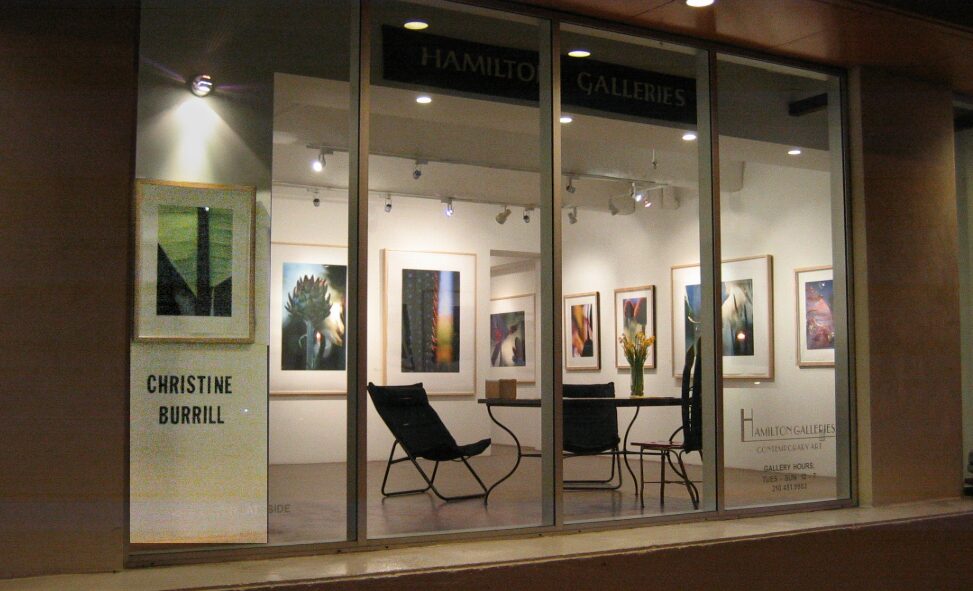
SPARC – Social and Political Resource Center, 685 Venice Blvd., Venice
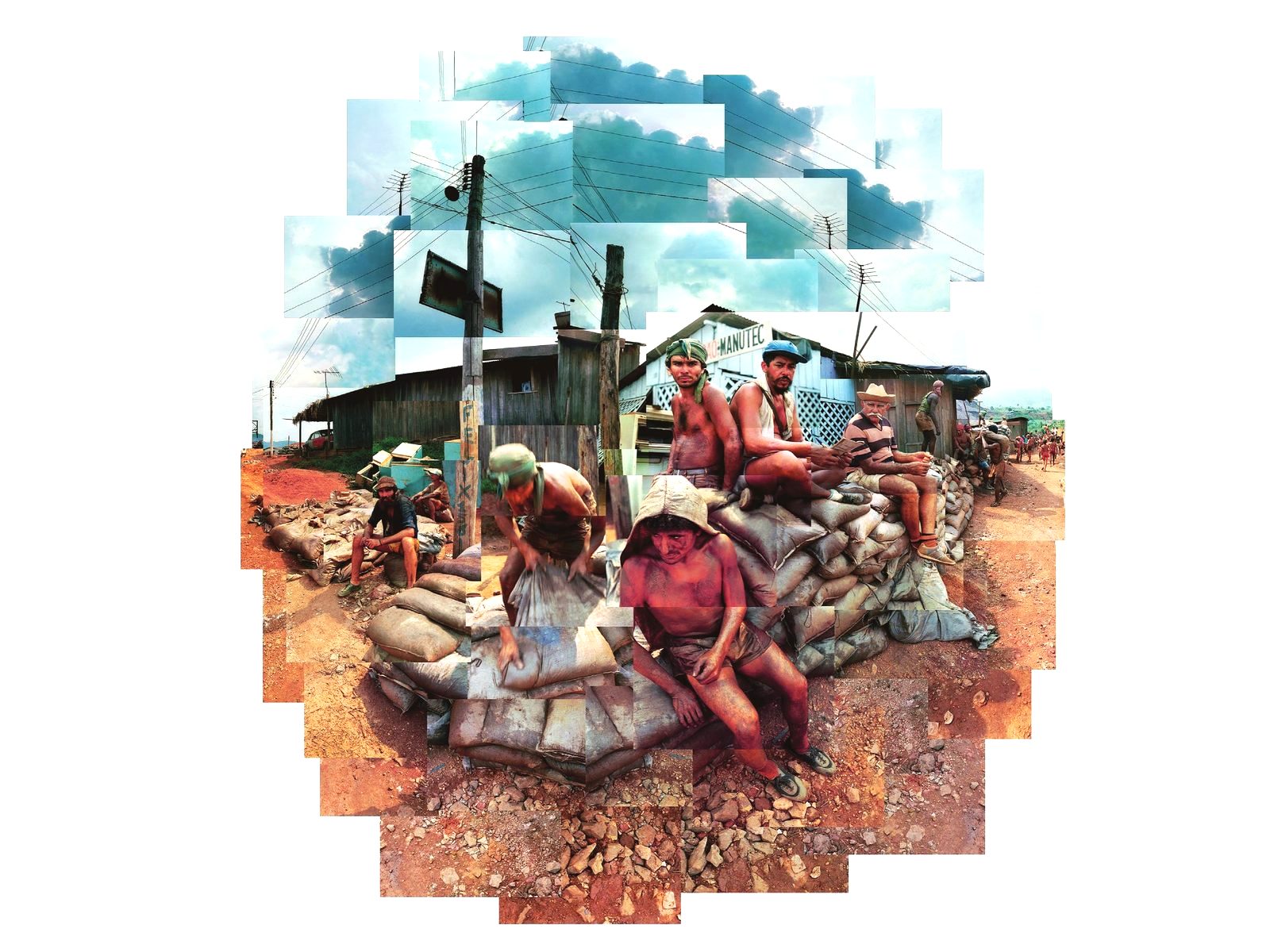
David Hockney has so popularized a manner of photo collage—in which dozens or even hundreds of standard-size color prints are assembled into a shimmering, faceted whole—that those who practice the same method are assumed to be derivative, poachers on claimed territory. But for all the simple charm of his work, Hockney neither defined the medium of photo collage nor exhausted it. Christine Burrill’s show at SPARC, “Gathering Riches: Images From the Brazilian Amazon,” is glorious proof that a medium, however familiar, is exactly as fresh and compelling as the vision brought to it.
Burrill, a documentary filmmaker, first visited Brazil in 1968 and in 1971 edited a film on the state of torture there. She has been back more than 20 times since, both filming and making still photographs that, since the 1980s, she has assembled in vivid, jagged-edged collages.
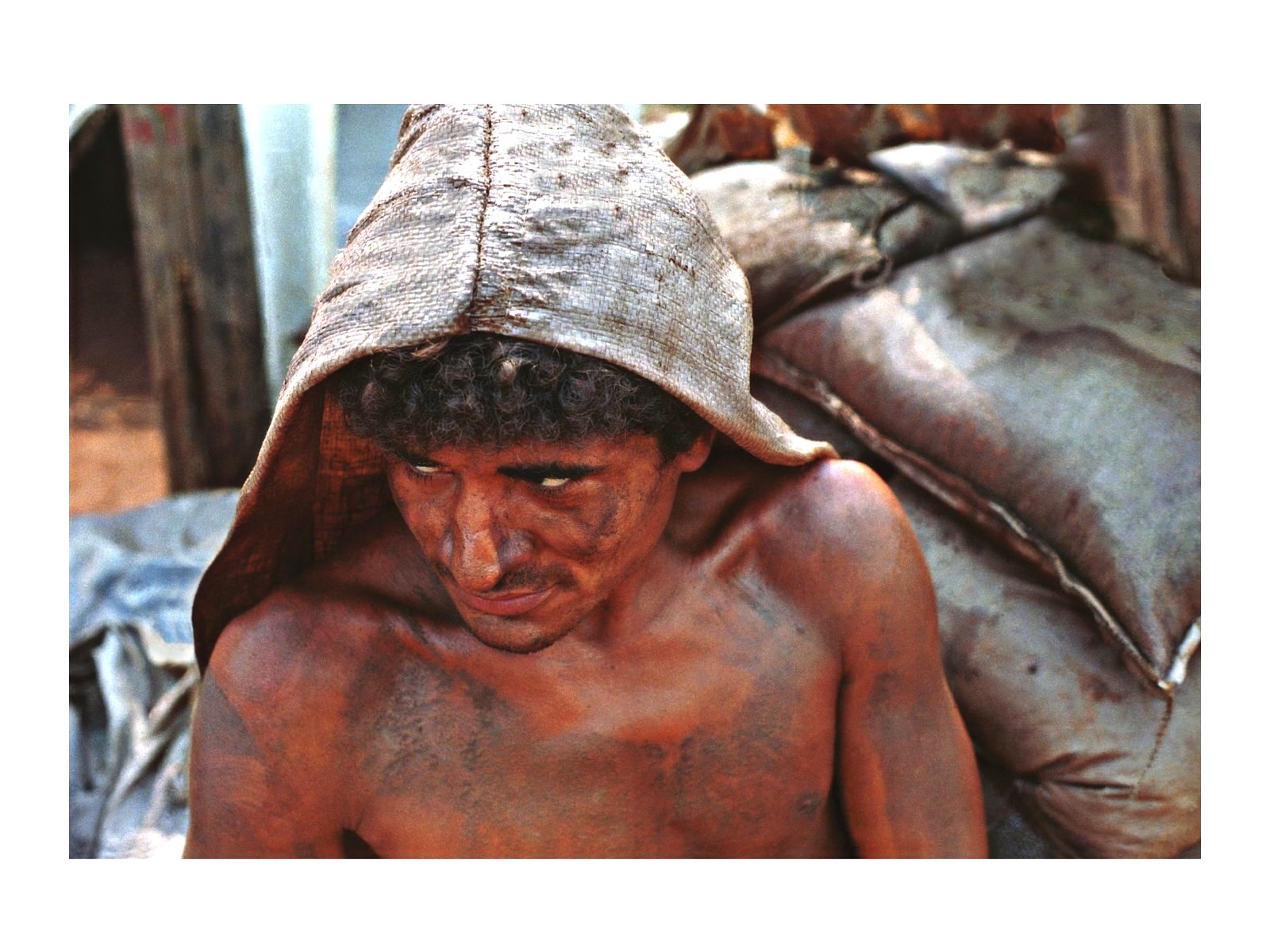
The recent work here focuses on several indigenous tribes of the Amazon and on gold miners working the depleted vein of Serra Pelada (a subject also documented, stunningly, by photographer Sebastião Salgado). It’s hard to say which gives Burrill’s work more power: the conscience and sensitivity driving it, or the richness and beauty of its form. Each emboldens the other, and the partnership yields a body of work with tremendous integrity.
Burrill makes the photographs for each collage over a period of 10 to 20 minutes, her notes explain, and her final images, while compact, convey a definite sense of time’s passage. Like short films whose entirety can be seen at once, they contain movement, shifting perspectives and narrative progression.
“Red River” traces the meandering flow of a rusty stream of water as it washes through a sluice box and snakes onward in the dirt. The river contains gold, but also mercury, which the miners add to amalgamate the gold dust. As a carrier of both promise and poison, the curving stripe of opaque liquid is mesmerizing.
In “The Celebration,” Burrill shows several members of the Arawete tribe preparing to mark a successful harvest. Repeated three times across the center of the collage is the image of a man, whose body has been smeared with the juice of red berries, having his hair dusted with downy white eagle feathers. Like so many of Burrill’s works, this image has both the intimacy of a close-up and the informational clarity of a more distanced view. Burrill works like an ethnographer, preserving images of ritual and culture, but also like a genre painter, intent on evoking the ambience, the colors and the textures that make up everyday life.
Beautiful and urgent, the work here ultimately contrasts two radically different approaches to survival, two distinct ways, as Burrill puts it, of gathering the Earth’s riches: on the Earth’s own terms, or on terms dictated by human need and greed. — LEAH OLLMAN, Special To The Times
Copyright 2001 Los Angeles Times
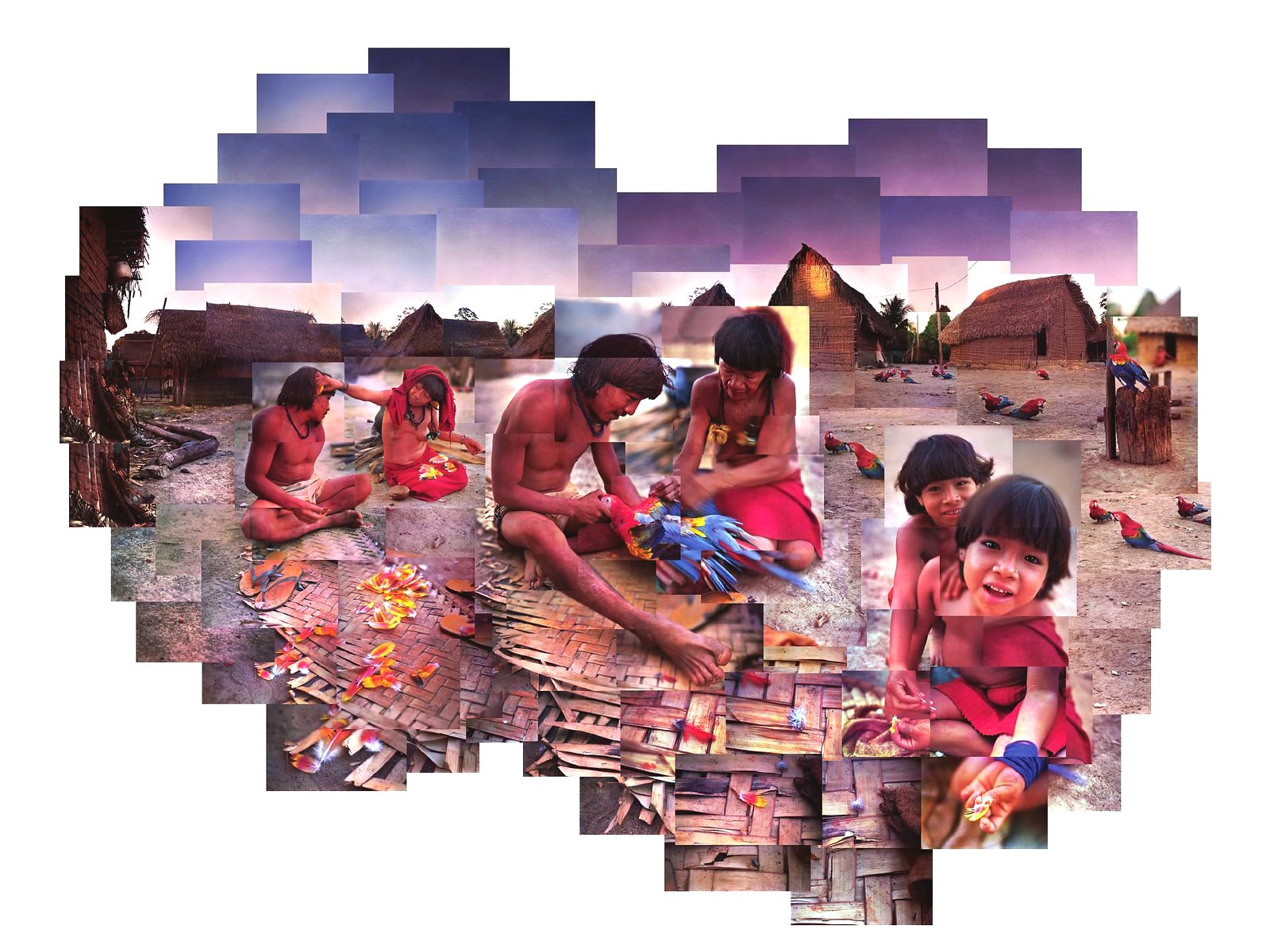
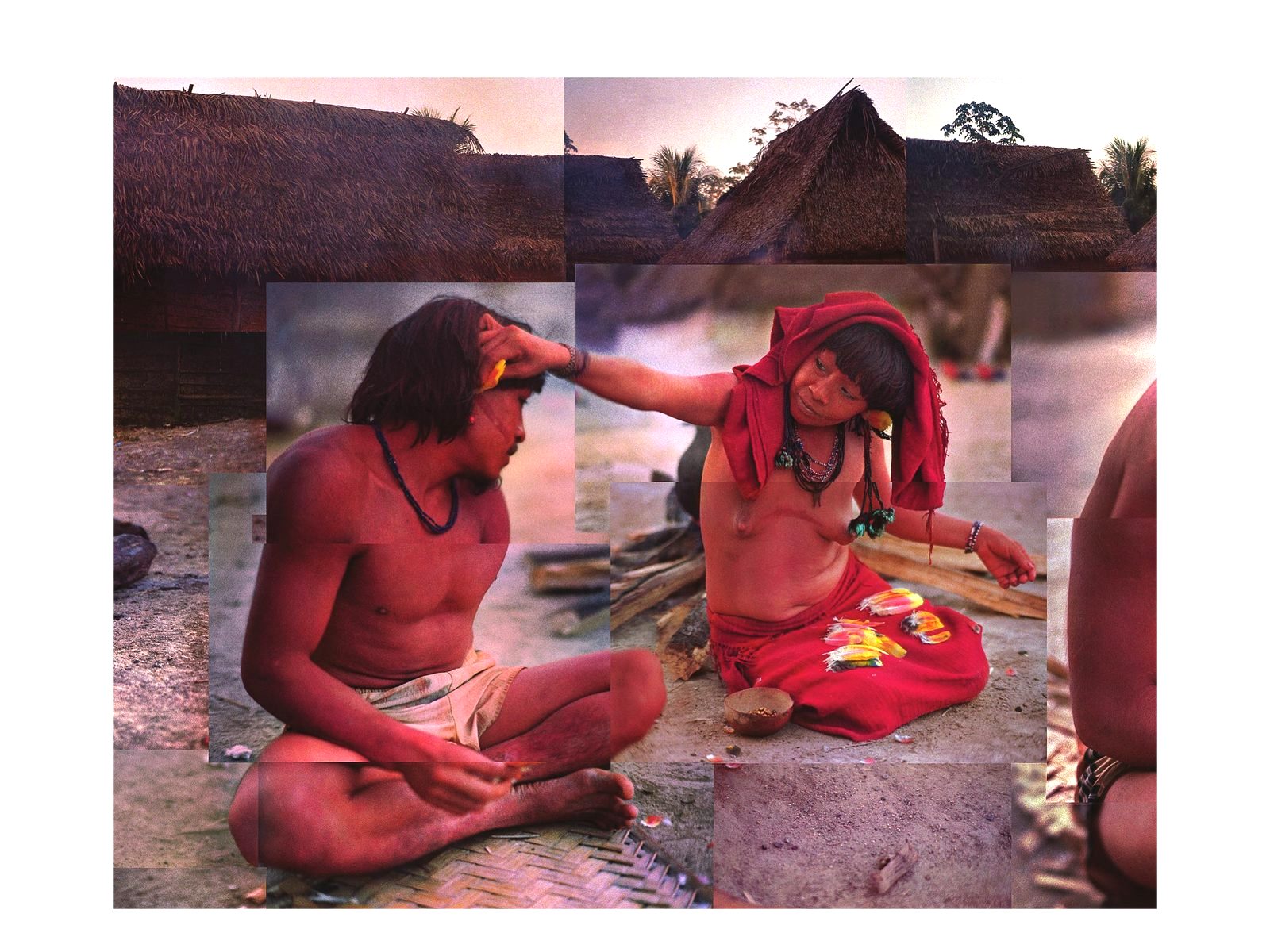
Plucking yellow feathers from a scarlet macaw for an upcoming festival.
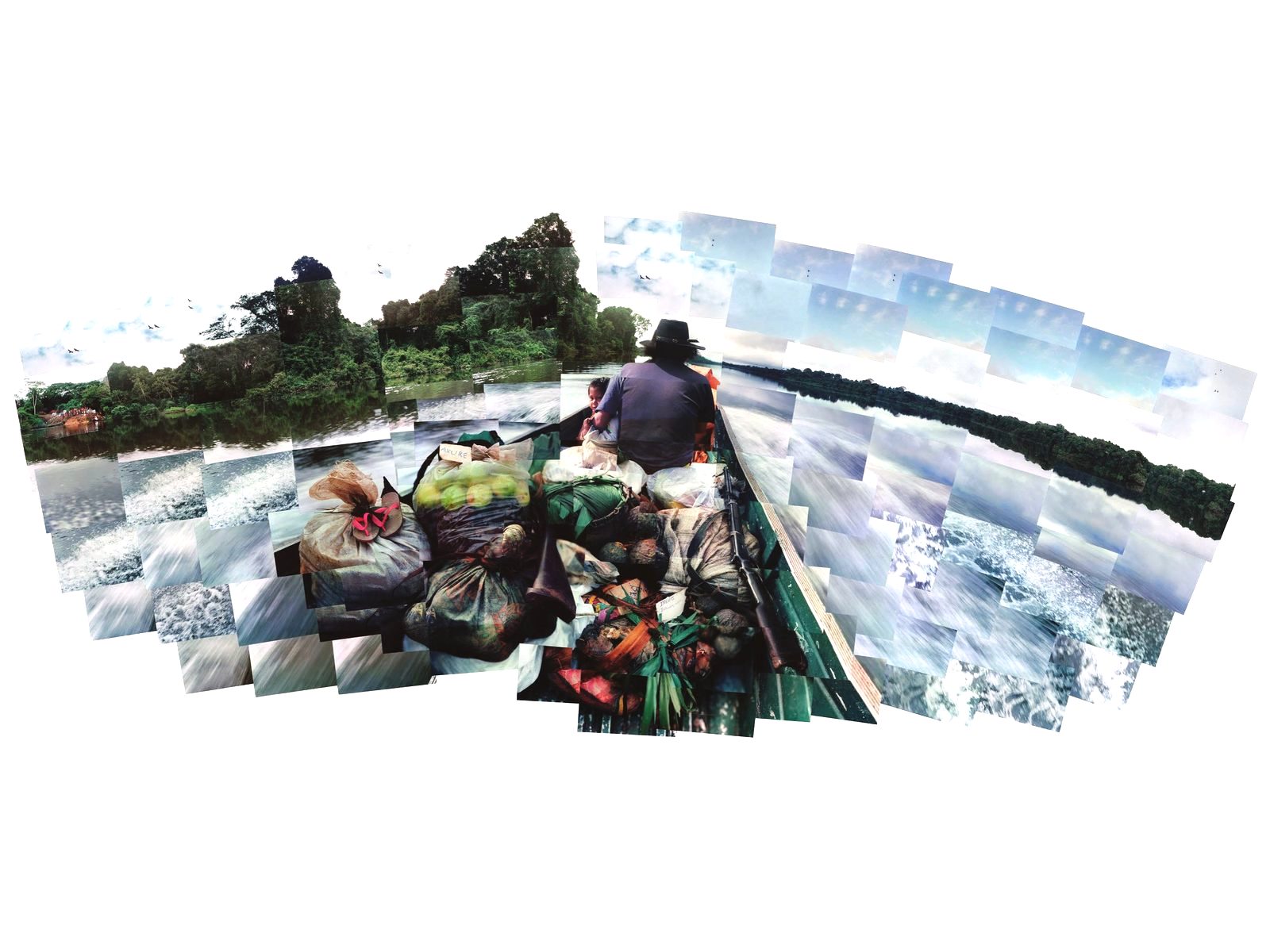
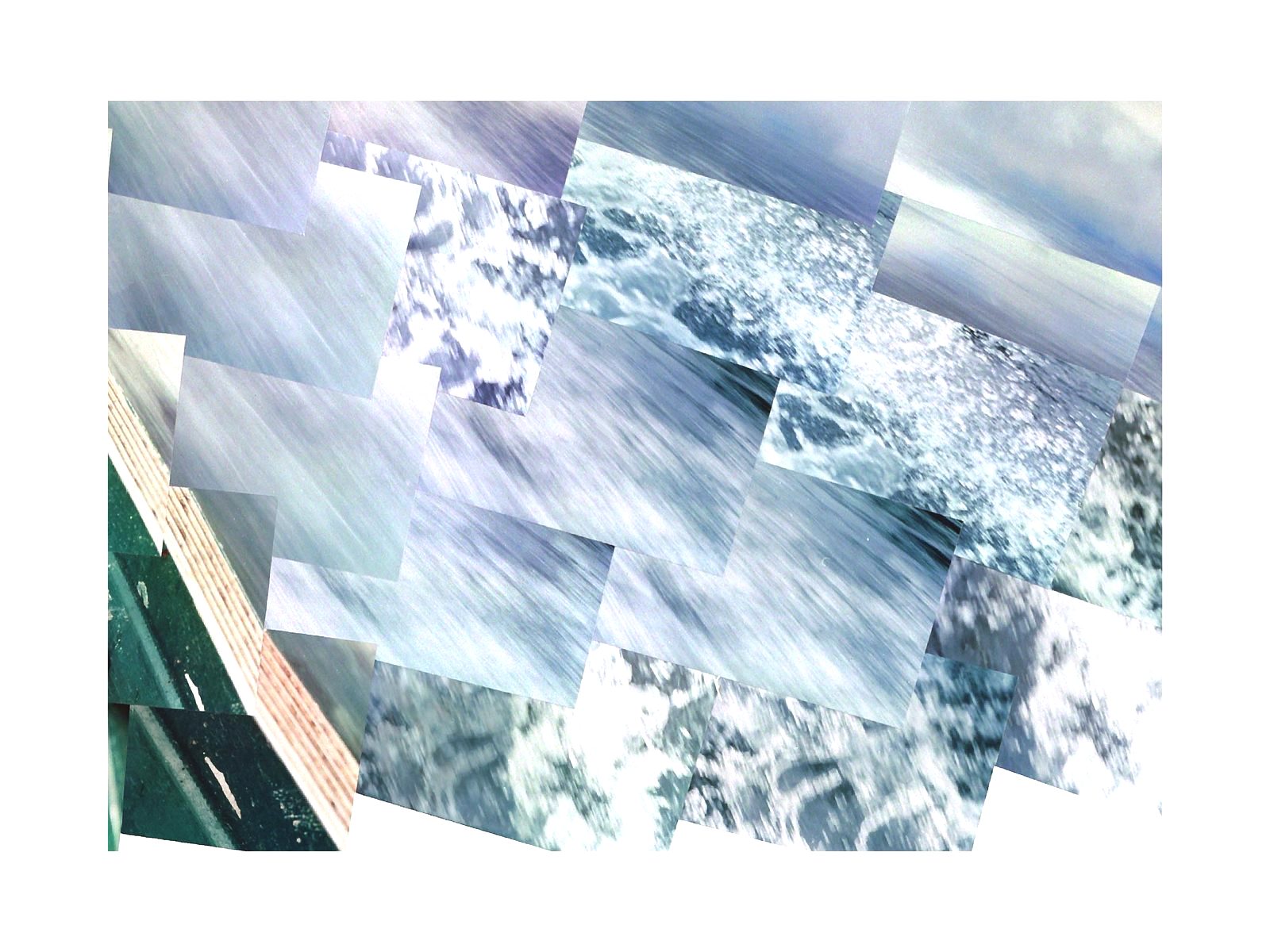
“The Provider” — A grandfather takes the harvest from the summer encampment to the main village.
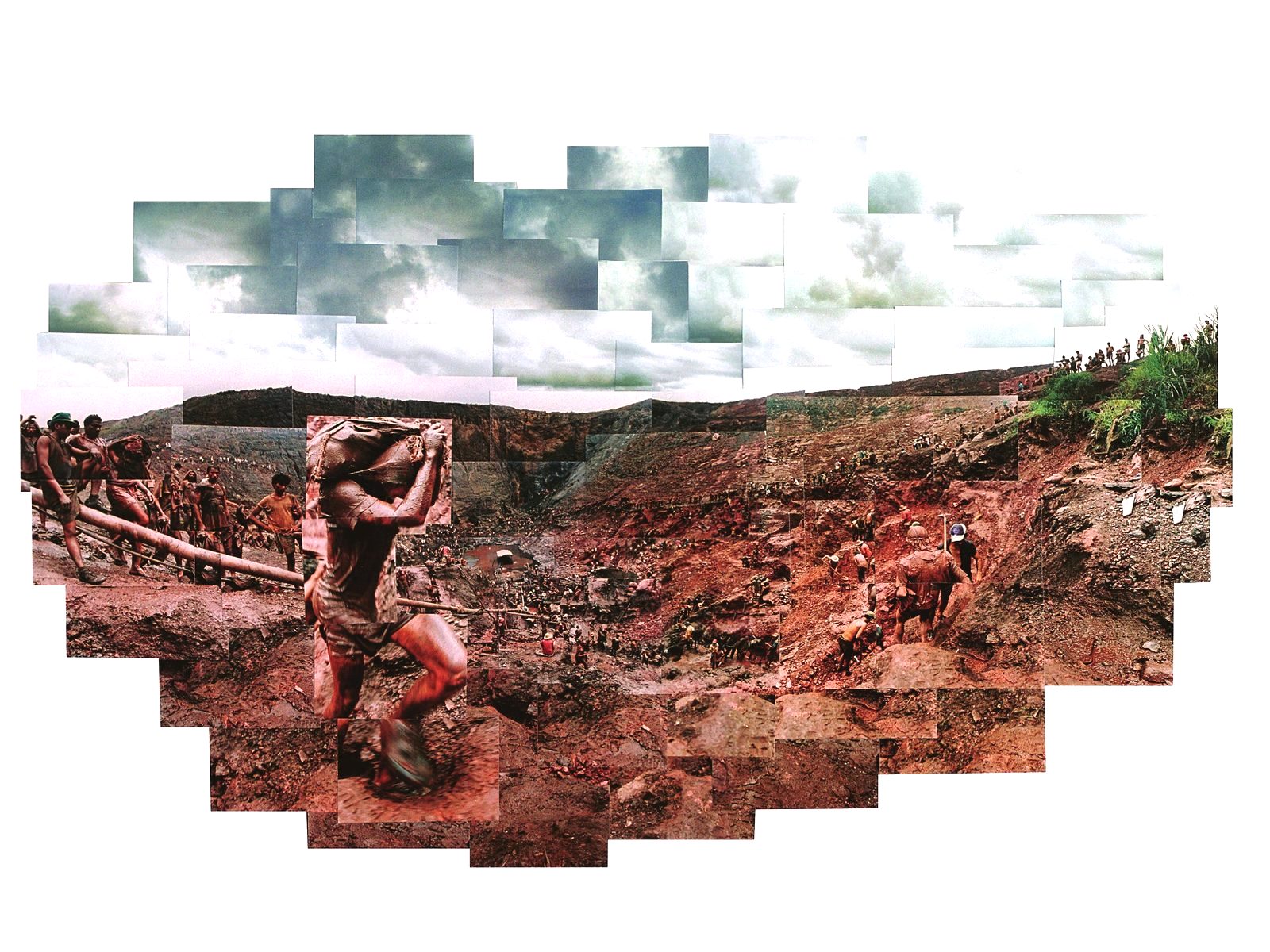
A hopeful miner carries gold-bearing dirt from the main pit at Serra Pelada, Brazil.
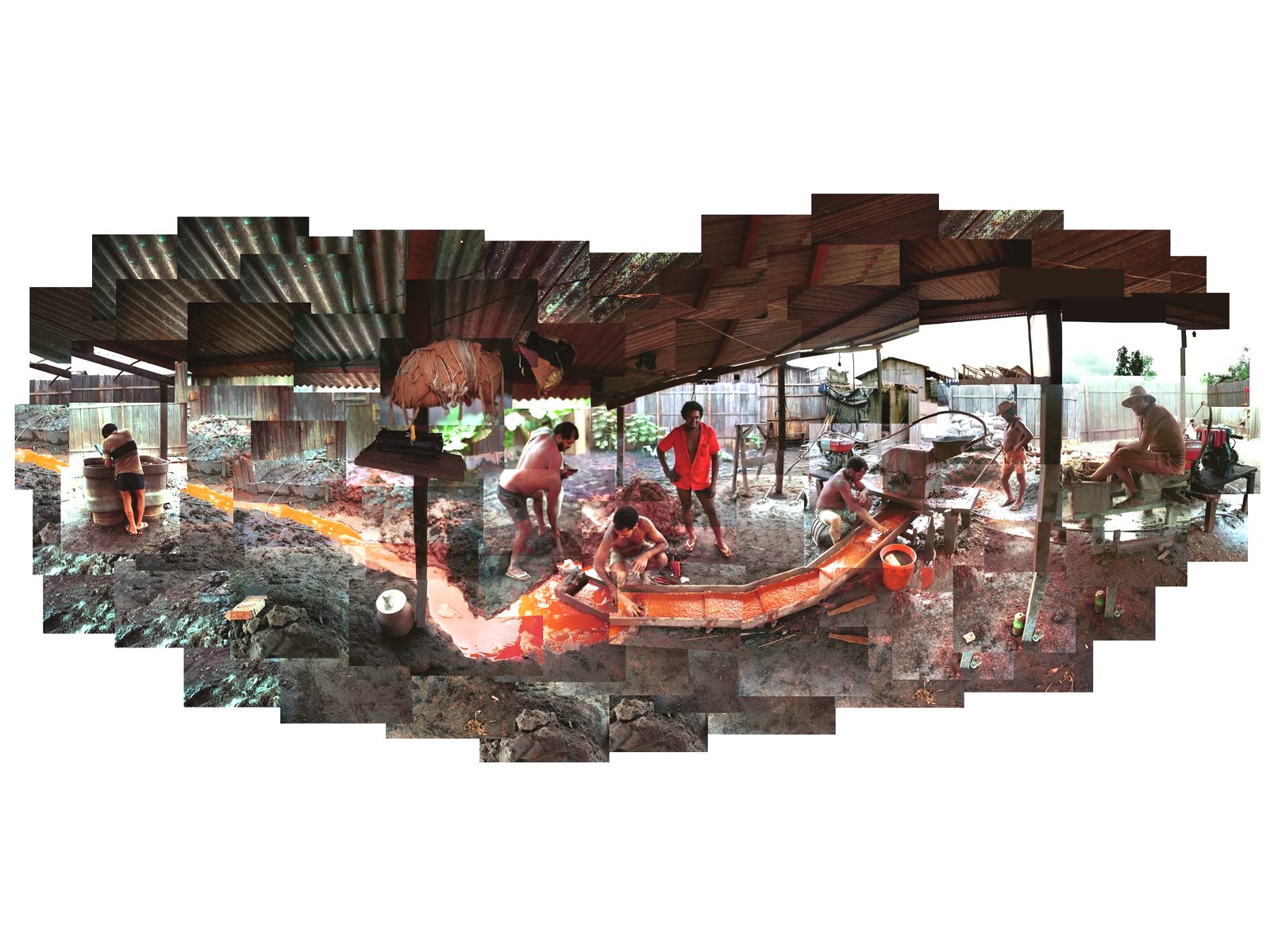
“Red River” — Miners extract gold using mercury, poisoning themselves and the rivers feeding into the Indian reserves.